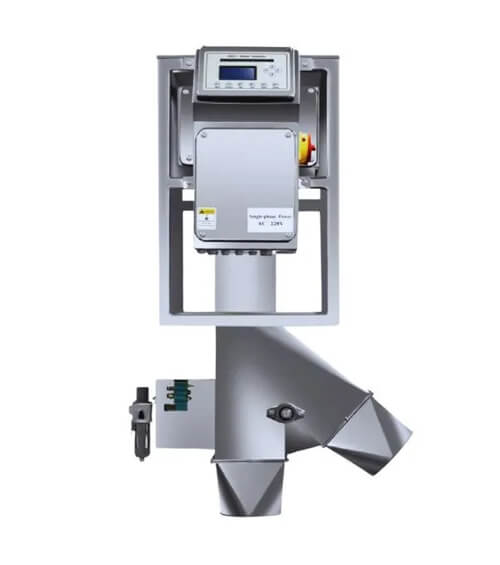
Metal Detector
A Metal Detector in an industrial or manufacturing context—especially in food, pharmaceutical, textile, or packaging industries is a device used to detect and remove metal contaminants from products on production lines to ensure safety and quality.
Key Features of Industrial Metal Detectors
- Detection Sensitivity: Adjustable to detect very small metal particles (as low as 0.1 mm in some models).
- Types of Metal Detected:
- Ferrous metals (iron, steel)
- Non-ferrous metals (aluminum, copper)
- Stainless steel (often the hardest to detect)
- Reject Mechanisms: Air blast, pushers, drop flaps, or conveyor stops to remove contaminated product.
- Construction: Stainless steel housing for hygiene and durability; often IP65 or higher rated for washdown environments.
- User Interface: Digital controls with LCD/LED display for sensitivity settings, diagnostics, and alarms.
- Integration: Can be integrated with existing production lines and quality control systems.
- Compliance: Meets food safety standards like FDA, HACCP, ISO, and GMP.